High Altitude on Kilimanjaro and Meru
Altitude affects people differently and there are no specific factors such as age, sex, or physical condition that correlate with the susceptibility to altitude sickness. Most people can hike to 2,438 meters (8,000 feet) with minimal affect. If this is your first trip at altitude, it is important to be extremely cautious when hiking either Meru or Kilimanjaro. The medical definition of altitude is commonly given three rankings of high, very high, and extremely high. The lower and upper boundaries of these ranks are shown in the table below.

Medical Definition of High Altitude
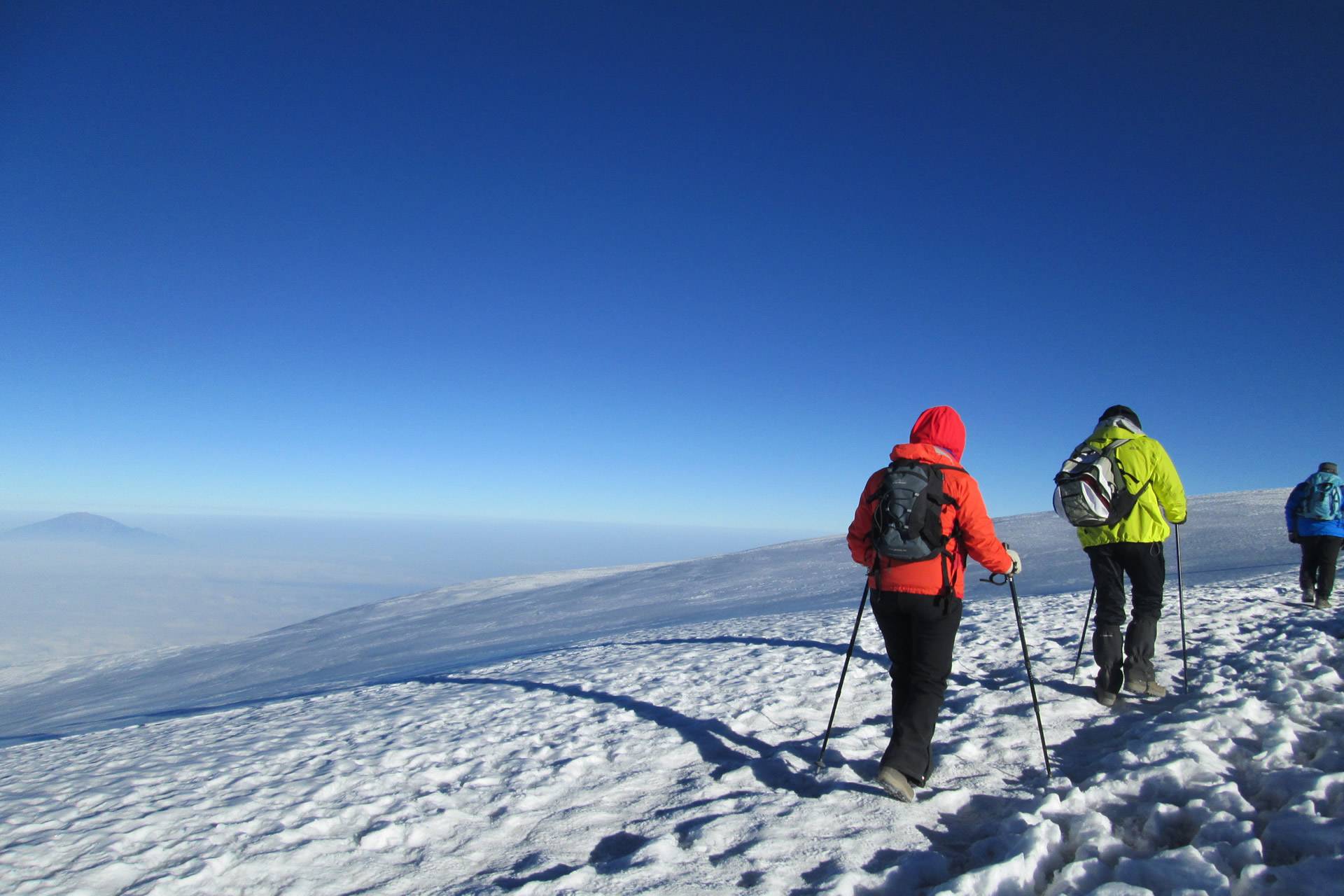
The summit of Kilimanjaro, 5895 meters (19,340 feet), falls in the extremely high category and proper precautions should be taken to mitigate the risks of high altitude hiking. Crater Camp, the highest camp on Kilimanjaro at 18,865 feet/5,750 meters, also falls in the extremely high category.
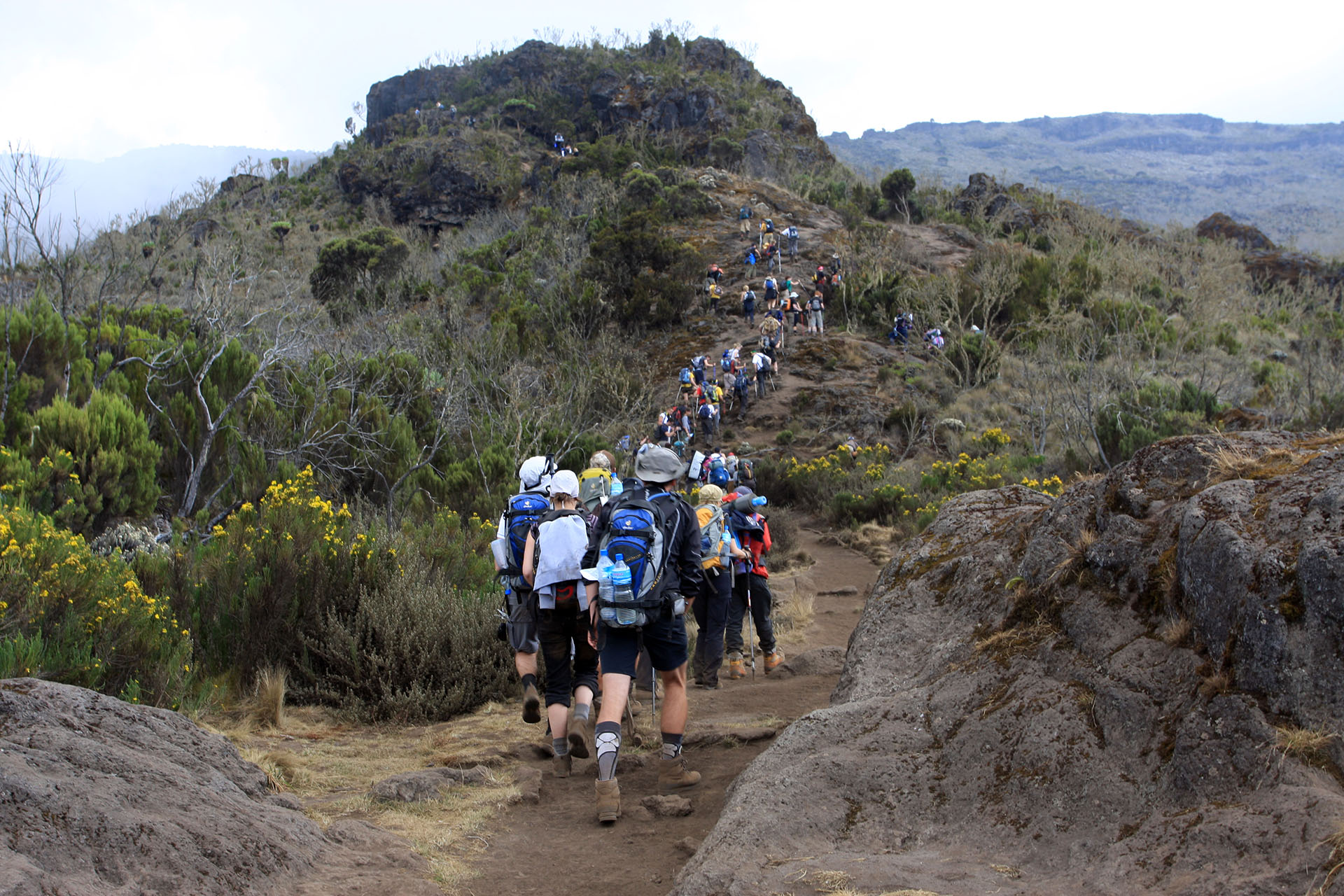
Kilimanjaro’s base camps – Barafu, School and Kibo – fall in the very high category of altitude and hikers could experience severe signs of altitude sickness at these camps. Several other lower camps are in the very high range and it is important to spend time at these camps for acclimatization. Mount Meru’s peak, 4,566 meters (14,990 feet), falls in the very high altitude category and hikers can also experience severe altitude sickness while hiking Meru.
What causes altitude sickness and how do you adjust to high altitudes while climbing Kilimanjaro?
Symptoms associated with altitude sickness result from the body’s inability to adjust to lower levels of oxygen in the blood. At sea level, the concentration of oxygen is about 21% and the barometric pressure averages 760 mmHg. As altitude increases, oxygen concentration remains the same but the number of oxygen molecules per breath is reduced due to lower barometric pressure. At 3,658 meters (12,000 feet), barometric pressure decreases to 483 mmHg, resulting in roughly 40% fewer oxygen molecules per breath. In order to increase oxygen levels in the blood, your body responds by breathing faster. Although oxygen levels increase, sea level concentrations cannot be reached. The body must adjust to having less oxygen. This adjustment is called acclimatization. At elevations above 5,500 meters, acclimatization is not possible and the body begins to deteriorate.
Acclimatization
The main cause of altitude sickness is going too high too fast. Given enough time, your body will adapt to the decrease in oxygen at a specific altitude. This process is known as acclimatization and generally takes one to three days at any given altitude. Upon climbing to a higher elevation, the body must readjust to the new altitude again over a period of one to three days.
In order to cope with decreased oxygen levels, the body reacts in the following ways:
-
Respiration frequency and depth increases
-
Pressure in pulmonary arteries is increased, “forcing” blood into portions of the lung which are normally not used during sea level breathing.
-
Additional red blood cells are produced to carry oxygen
-
Enzymes are produced to facilitate the transfer of oxygen from hemoglobin to body tissues
Currently it is recommended that above 3000 meters (9,048 feet) each night should average not more than 300 meters (984 feet) above the last, with a rest day every two or three days (or every 1000m). It is very important to not ascend any further if experiencing symptoms of AMS and that descent should be considered until symptoms are relieved. However, due to short vacation times and weather conditions, many hikers ascend more quickly than recommended. It is imperative that hikers be aware of symptoms of Acute Mountain Sickness during shorter-than-recommended trips and that they communicate with the guide regularly regarding their condition.
Altitude-related illnesses
Cheyne-Stokes Respiration
Above 3,000 meters (9,842 feet), most people experience a periodic breathing during sleep known as Cheyne-Stokes Respirations. The pattern begins with a few shallow breaths and increases to deep sighing respirations then falls off rapidly for a few seconds before shallow breathing begins again. During the period when breathing stops the person often becomes restless and may wake with a sudden feeling of suffocation. This can disturb sleeping patterns, exhausting the climber. This type of breathing is not considered abnormal at high altitudes. Diamox is helpful in relieving this periodic breathing.
Acute Mountain Sickness (AMS)
Acute Mountain Sickness is common at high altitudes and 75% of people experience some symptoms over 3,000 meters (9,842 feet). The severity of AMS depends on several factors including rate of ascent, elevation, and individual susceptibility. Symptoms usually begin between 12 and 24 hours after reaching altitude and decrease in severity by the third day.
Mild AMS symptoms:
-
Headache
-
Nausea and dizziness
-
Loss of appetite
-
Fatigue
-
Shortness of breath
-
Inability to sleep
As long as the symptoms are mild, hikers can continue to climb at a moderate rate. All symptoms of AMS should be communicated to the head guide and progress reports should be given daily.
Moderate AMS symptoms:
-
Severe headache
-
Nausea and vomiting
-
Increased weakness and fatigue
-
Shortness of breath
-
Decreased co-ordination
Although the hiker may be able to continue walking on their own while experiencing moderate symptoms of AMS, normal activity becomes more and more difficult as the hiker gains altitude. At this stage, only medicine and descent can reverse the symptoms of AMS. Even a minor descent of only 300 meters will result in a significant improvement. All symptoms of moderate AMS should be communicated to the guide at which point the guide will make a decision whether or not to evacuate. Depending on symptoms, the climber may be told to walk a straight line. If he or she is not able to walk a straight line on their own, immediate descent is required.
Severe AMS symptoms:
-
Increased shortness of breath
-
Inability to walk
-
Decreasing mental awareness
-
Fluid buildup in lungs
Severe AMS can only be treated by immediate descent to lower altitudes.
Severe altitude-related illnesses
Two other severe forms of altitude sickness may result from failure to descend to lower altitudes. These include High Altitude Pulmonary Edema (HAPE) and High Altitude Cerebral Edema (HACE). Although these happen less frequently, they usually result from fast ascents among people who are not properly acclimatized. The lack of oxygen in the body causes a leakage of fluid through the capillary walls into either the lungs or brain.
High Altitude Pulmonary Edema (HAPE)
HAPE results from fluid buildup in the lungs and can prevent effective oxygen exchange. Impaired cerebral function, cyanosis, and death may result in severe cases of HAPE. Symptoms of HAPE include:
-
Shortness of breath even at rest
-
Fatigue and weakness
-
Feeling of impending suffocation or drowning
-
Grunting or gurgling sounds when breathing
-
Persistent cough bringing up white, watery, or frothy fluid
-
Confusion and irrational behavior
In cases of HAPE, immediate descent is necessary. Patients should be evacuated to a medical facility for follow-up treatment.
High Altitude Cerebral Edema (HACE)
HACE is the result of swelling of brain tissue from fluid leakage. Symptoms include the following:
-
Headache
-
Loss of coordination (ataxia)
-
Weakness
-
Decreasing levels of consciousness including, disorientation, loss of memory, hallucinations, blindness, and coma.
HACE generally occurs after a week or more at high altitude. Severe instances can lead to death if not treated quickly and immediate descent is a necessary life-saving measure. Follow-up care must be sought at a medical facility following HACE.
Prevention of altitude sickness
There are two ways to prevent altitude-related illness including proper acclimatization and preventative medicines. These recommendations are written specifically for climbing Mounts Meru and Kilimanjaro and may not be applicable to other high mountains.
-
Tell guide your AMS symptoms and keep him as well as the other group members informed of your progress.
-
After 3,000 meters (9,842 meters) increase altitude gradually and take a day of rest for every 1,000 meters (3,280 feet) gained in elevation.
-
Climb high and sleep low. It is recommended that you acclimate during the day by climbing to high elevations and then descending to sleep.
-
If you begin to show symptoms of moderate altitude illness, don’t go higher until symptoms decrease.
-
If symptoms increase, go down.
-
Stay properly hydrated. Acclimatization is often accompanied by fluid loss, so you need to drink lots of fluids to remain properly hydrated (at least 4-6 liters per day). Urine should be clear.
-
Don’t overexert yourself at altitude. Light activity during the day is better than sleeping because respiration decreases during sleep, exacerbating the symptoms.
-
Avoid tobacco and alcohol and other depressant drugs including sleeping pills. Depressants further decrease the rate of respiration during sleep resulting in a worsening of the symptoms.
-
Eat a high calorie diet – pack easy-to-eat snacks for the extremely high altitude zone. Liquid food like Gu is easier to get down than a frozen bar.
Preventative Medications
Diamox (Acetazolamide)
Diamox is a drug that allows you to breathe faster so that you metabolize more oxygen. Although gradual ascent is recommended as opposed to Diamox, the drug does help to avert symptoms of Altitude Mountain Sickness. Because it takes a while for Diamox to have an effect, it is advisable to start taking it 24 hours before you go to altitude and continue for at least five days at higher altitude. The recommended dose is between 125 mg and 250 mg twice daily starting one to two days before the trek and continuing for three days once the highest altitude is reached. Possible side effects include tingling of the lips and finger tips, excessive urination, blurring of vision, and alteration of taste. Contact your physician for a prescription. Since Diamox is a sulfonamide drug, people who are allergic to sulfa drugs should not take Diamox. Diamox has also been known to cause severe allergic reactions to people with no previous history of Diamox or sulfa allergies.
Dexamethasone
Dexamethasone, a steroid, is a prescription drug that decreases brain and other swelling reversing the effects of AMS. Dosage is typically 4 mg twice a day for a few days starting with the ascent. This prevents most symptoms of altitude illness.
WARNING: Dexamethasone is a powerful drug and should be used with caution and only on the advice of a physician. It should only be used by those who have prior experience with the drug and its uses.
Ibuprofen
Relieves altitude-induced headache.
Nifedipine
Rapidly decreases pulmonary artery pressure and also seems able to decrease the narrowing in the pulmonary artery caused by low oxygen levels, thereby improving oxygen transfer. It can therefore be used to treat HAPO, though unfortunately its effectiveness is not anywhere as dramatic that of dexamethasone in HACO. The dosage is 20mg of long acting nifedipine, six to eight hourly.
Frusemide
May clear the lungs of water in HAPO and reverse the suppression of urine brought on by altitude. However, Frusemide can also lead to collapse from low volume shock if the victim is already dehydrated. Treatment dosage is 120mg daily.
Conclusion
While Kilimanjaro is an exhilarating and fun-filled adventure, there are many dangers associated with high altitude climbing. Although this information will help you plan and prepare for your climb, it is not a substitute for high altitude medical training or experience. You must be extremely cautious during your climb and inform the guide and others in the group of any altitude sickness you experience. Our guides are Wilderness First Responder certified and trained to recognize the signs of altitude sickness. We carry emergency oxygen on our Kilimanjaro climbs and add a portable altitude chamber on climbs that include a night at Crater Camp (altitude 18,865 feet/5,750 meters). Oxygen saturation checks are part of daily health checks.